

Calandre by Paco Rabanne is one of the fragrances that established Paco Rabanne's reputation for treating perfume with the same futuristic attitude he brought to fashion. Released in 1969 as the house's first fragrance, Calandre paired the traditional elegance of rose, iris, jasmine, and lily of the valley with sparkling aldehydes, sharp green notes, bergamot, oakmoss, vetiver, sandalwood, musk, and amber. Rabanne still describes Calandre through the unusual contrast of rose and metal, an idea that remains remarkably distinctive more than five decades after its introduction.
What makes Calandre worth understanding today is that it does not define femininity through sweetness. There is almost nothing gourmand about it. The fragrance feels cool, green, clean, floral, slightly powdery, mossy, and subtly metallic. That metallic impression is not a literal metal note. It comes from the interaction of aldehydes, greenery, flowers, and the dry chypre-like base, creating the sensation of polished chrome beside soft petals. It was deliberately unconventional in 1969, and it still smells unlike most modern women's fragrances.
What does Calandre by Paco Rabanne smell like?
Calandre smells green, aldehydic, floral, fresh, powdery, mossy, woody, and subtly metallic.
The opening is crisp and immediately recognizable. Aldehydes provide a sparkling, almost cool-air effect, while bergamot adds citrus brightness. Green notes give Calandre its sharp leafy character and prevent the perfume from becoming soft or conventionally romantic. South Beach Perfumes currently lists aldehydes, green notes, and bergamot as the primary opening structure.
The floral heart is considerably softer. Rose provides the main floral identity, while lily of the valley gives a clean, almost dewy freshness. Hyacinth reinforces the green quality, geranium introduces an aromatic floral edge, jasmine adds femininity, and orris root contributes the powdery texture that becomes increasingly noticeable as the fragrance settles.
The base moves Calandre firmly into classic green perfumery. Oakmoss provides earthy, mossy depth, vetiver adds dryness, sandalwood softens the structure, amber contributes gentle warmth, and musk gives the fragrance a smooth finish.
The fascinating part is the contrast. Calandre smells clean without smelling like laundry. Floral without being sweet. Green without smelling like freshly cut grass. Powdery without becoming soft or cosmetic. The metallic impression running through the fragrance gives everything a cooler, more architectural quality.
What are the top, heart, and base notes of Calandre?
Calandre was released in 1969 as Paco Rabanne's first fragrance. Rabanne still identifies 1969 as the year the house entered perfumery with Calandre.
Top Notes: Aldehydes, Green Notes, Bergamot
Heart Notes: Rose, Lily of the Valley, Orris Root, Hyacinth, Geranium, Jasmine
Base Notes: Oakmoss, Vetiver, Musk, Sandalwood, Amber
The note structure is relatively traditional when read individually. What made Calandre unconventional was how those materials were arranged. Aldehydes and green notes gave the flowers a metallic coolness, while oakmoss and vetiver created a dry base instead of surrounding the florals with heavy sweetness.
That composition fit Paco Rabanne's broader design language. Rabanne's own history of the fragrance describes Calandre as a fresh metallic rose inspired by movement, modernity, and the industrial materials that defined the designer's work.
Is Calandre for men, women, or unisex?
Calandre was created and marketed as a women's fragrance. Rabanne continues to describe it as an avant-garde feminine perfume, and fragrance archives identify both the original and current Calandre versions as fragrances for women.
Its rose, jasmine, lily of the valley, iris, and powdery floral character place it within traditional women's perfumery.
At the same time, Calandre is unusually dry, green, woody, and unsweet. Its oakmoss, vetiver, geranium, aldehydes, and metallic character can easily appeal to anyone who enjoys classic green fragrances regardless of gender.
How long does Calandre last?
Calandre has good to very good longevity, particularly for a green floral Eau de Toilette.
For the current style of Calandre, approximately 6 to 8 hours is a reasonable expectation for many wearers. Parfumo's current source-backed record for the marketed Eau de Toilette gives it a longevity rating of 7.3 out of 10.
Older formulations can perform differently.
The original 1969 Eau de Toilette, also known as Eau de Calandre, currently carries a community longevity rating of 7.9 out of 10, while the historical Parfum is rated even more strongly.
That matters because the South Beach Perfumes product page currently includes both vintage and more recent Calandre bottles. A vintage bottle may smell richer, greener, mossier, or stronger than a modern formulation depending on production period and storage history.
How strong is the projection of Calandre?
Calandre has moderate projection in its current Eau de Toilette form.
Parfumo currently rates the modern Eau de Toilette at 6.7 out of 10 for sillage, while the original 1969 Eau de Toilette receives a slightly stronger 7.0 out of 10.
During the first couple of hours, the aldehydes, green notes, bergamot, hyacinth, rose, and geranium create the most noticeable scent trail.
As the fragrance dries down, it becomes smoother and closer to the body, with iris, oakmoss, vetiver, sandalwood, musk, and amber taking over.
Calandre has enough presence to smell polished and distinctive without normally overwhelming a room.
What fragrance family is Calandre?
Calandre belongs primarily to the Floral Aldehyde and Floral Chypre fragrance family, with strong green, woody, mossy, and powdery characteristics.
Fragrantica classifies the fragrance as Floral Aldehyde, while Parfumo's historical Eau de Toilette emphasizes chypre, floral, green, spicy, and woody qualities.
It can reasonably be described as:
Floral Aldehyde
Green Floral
Floral Chypre
Woody Floral
Mossy Floral
The aldehydes provide the sparkle, the flowers provide femininity, and oakmoss with vetiver provides the classic dry foundation.
What seasons is Calandre best for?
Calandre performs particularly well during spring and fall, with summer daytime wear also being an excellent option.
Spring allows its green notes, bergamot, hyacinth, lily of the valley, rose, and jasmine to feel especially natural.
Summer works because Calandre is dry and unsweet. It does not contain the dense vanilla, caramel, or gourmand materials that can become heavy in warm weather.
Fall is equally interesting because cooler air allows oakmoss, vetiver, sandalwood, iris, and amber to become more noticeable.
South Beach Perfumes currently recommends Calandre primarily for daytime spring and summer wear, although its mossy base gives it enough structure to transition comfortably into fall.
Is Calandre better for daytime or nighttime?
Calandre is primarily a daytime fragrance, but it can transition easily into early evening.
The clean aldehydic opening makes it excellent for mornings, work, lunches, cultural events, shopping, and polished daytime occasions.
At night, its rose, iris, moss, vetiver, woods, and musk create a cooler, more sophisticated impression than a typical fresh floral.
It is not a traditionally seductive nighttime perfume. Calandre's appeal comes from confidence, intelligence, polish, and individuality rather than heavy sweetness.
What occasions should Calandre be worn for?
Calandre works especially well for office wear, business meetings, brunch, lunch, daytime weddings, museums, galleries, garden events, professional gatherings, travel, dinners, and elegant everyday wear.
It is particularly suited for moments where you want fragrance to feel refined without becoming obvious.
Calandre also works beautifully with structured clothing. Tailored jackets, crisp shirts, minimalist dresses, silver jewelry, neutral colors, and clean architectural styling complement the fragrance's metallic green personality.
Its character is sophisticated rather than decorative.
What age range is Calandre best suited for?
Calandre will probably appeal most naturally to adults approximately 25 and older, although fragrance has no meaningful age restriction.
The aldehydes, oakmoss, vetiver, iris, geranium, and chypre structure may feel more sophisticated than the sweet fruity fragrances many younger consumers encounter first.
A younger fragrance enthusiast interested in vintage perfume, green fragrances, aldehydes, or unconventional florals may find Calandre especially interesting.
Calandre is less about age and more about taste.
It suits someone who appreciates perfume as composition rather than simply wanting to smell sweet.
Is Calandre office appropriate?
Yes. Calandre is extremely office appropriate.
Its clean, green, floral character feels professional, restrained, and polished. Two or three sprays should be enough for most workplaces.
The fragrance also avoids several characteristics that can become difficult in shared spaces. It is not heavily gourmand, intensely vanilla-driven, smoky, leathery, or excessively sweet.
South Beach Perfumes specifically recommends Calandre for office settings and polished daytime wear.
Is it good for dates? Yes, particularly for daytime dates, museums, galleries, lunches, elegant dinners, and situations where you want to smell sophisticated rather than overtly seductive. Its rose, iris, musk, sandalwood, and moss become softer and more intimate as the fragrance develops.
Is it a safe blind buy? Moderate to low. Calandre can be a wonderful blind buy for someone who already enjoys aldehydes, green fragrances, oakmoss, rose, iris, vetiver, and classic perfumery. It is less safe for someone accustomed mainly to modern fruity florals, sugary gourmands, vanilla perfumes, or soft skin scents.
What fragrances smell similar to Calandre?
Calandre has a distinctive metallic-green personality that is difficult to duplicate exactly. Yves Saint Laurent Rive Gauche is frequently compared with it outside the South Beach Perfumes catalog, but these three currently available South Beach Perfumes fragrances explore related aldehydic, floral, mossy, green, or chypre territory. Fragrantica's similarity data also connects Calandre with several classic chypres including Knowing and L'Air du Temps.
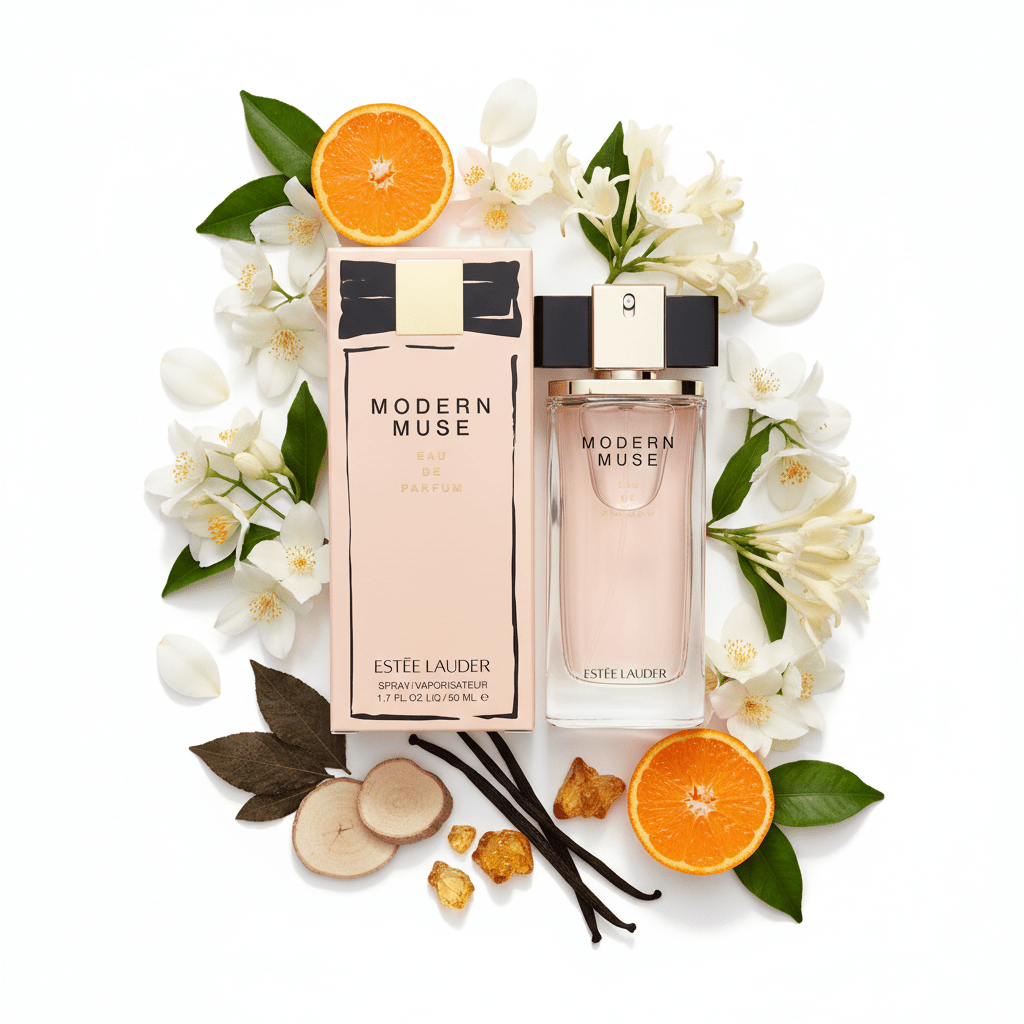
White Linen by Estée Lauder
White Linen is one of the best alternatives for someone attracted to Calandre's clean aldehydic character.
It combines aldehydes, lemon, hyacinth, rose, jasmine, violet, iris, oakmoss, vetiver, cedar, sandalwood, amber, and other florals. South Beach Perfumes currently lists White Linen with active purchase availability.
Calandre: greener, cooler, more metallic, more austere.
White Linen: brighter, more expansive, more powdery, and slightly warmer.
Both are excellent choices for someone who wants clean elegance without relying on modern musk or sweetness.
Knowing by Estée Lauder
Knowing is an excellent alternative for someone who enjoys the chypre side of Calandre but wants something deeper and stronger.
Knowing combines aldehydes, rose, coriander, green notes, tuberose, jasmine, orris, patchouli, oakmoss, vetiver, sandalwood, amber, and musk. South Beach Perfumes currently lists Knowing with active purchase availability.
Calandre: cooler, lighter, greener, more metallic.
Knowing: richer, darker, spicier, more patchouli-driven.
The shared aldehydes, rose, iris character, oakmoss, vetiver, sandalwood, amber, and musk make Knowing an excellent progression for someone who wants a more dramatic chypre.
L'Air du Temps by Nina Ricci
L'Air du Temps offers another classic interpretation of aldehydic florals over woods and moss.
Its composition includes aldehydes, carnation, rose, bergamot, jasmine, violet, iris, sandalwood, oakmoss, musk, amber, vetiver, and cedar. South Beach Perfumes currently lists L'Air du Temps with an active add-to-cart option.
Calandre: greener, sharper, cooler, more modernist.
L'Air du Temps: softer, spicier, more romantic, more traditionally floral.
Both reward someone who enjoys structured classic perfumery rather than straightforward sweetness.
What is the difference between available Calandre concentrations?
Calandre has existed in several concentrations and formulations during its long history, which makes this section particularly important for collectors.
Calandre Eau de Toilette
The current South Beach Perfumes listing is primarily for Calandre Eau de Toilette, with 1.7 oz and 3.4 oz vintage options as well as a 3.4 oz spray. Rabanne's official U.S. site currently sells Calandre in a 3.4 oz format as part of its fragrance archives.
The modern Eau de Toilette is lighter and somewhat softer than many older Calandre formulations. Source-backed community data currently places its longevity at 7.3 and sillage at 6.7.
Eau de Calandre, Original 1969 Eau de Toilette
The original 1969 Eau de Toilette was also marketed as Eau de Calandre.
Historical records describe it as a floral chypre with aldehydes, greenery, iris, lily of the valley, geranium, jasmine, rose, musk, oakmoss, ambergris, sandalwood, and vetiver. It currently carries stronger community performance ratings than the modern Eau de Toilette.
Calandre Parfum
A Calandre Parfum concentration was also released in 1969.
The Parfum used the same essential fragrance architecture in a richer and more concentrated presentation. Parfumo's source-backed record gives the historical Parfum an 8.3 rating for both longevity and sillage, although production of that concentration is discontinued.
Calandre Eau de Parfum
An Eau de Parfum version has also existed and is documented separately from the Eau de Toilette and Parfum. Fragrance records credit Michel Hy and show the Eau de Parfum as having good longevity and moderate projection.
Vintage Calandre and current Calandre should therefore not automatically be expected to smell identical. Reformulation, oakmoss restrictions, production period, concentration, and storage can all influence the wearing experience.
Learn more about fragrance concentrations
Is Calandre discontinued?
No. Calandre itself is not currently discontinued.
As of August 2026, Rabanne maintains an active official U.S. Calandre product page, lists the fragrance within its women's fragrance assortment, and includes it in the house's fragrance archives.
This is important because individual historical versions are discontinued.
The original 1969 Parfum is discontinued, and certain older Eau de Calandre presentations and vintage formulations are no longer regular production items.
The current Calandre fragrance, however, remains officially marketed.
South Beach Perfumes also currently lists both vintage Calandre bottles and a regular 3.4 oz spray, with active inventory at the time checked.
When was Calandre released?
Calandre was released in 1969.
It was the first fragrance from Paco Rabanne, introduced only a few years after the designer established his fashion house. Rabanne continues to identify Calandre as the fragrance that began the house's perfume history.
The timing is significant because Rabanne was already known for fashion created from unconventional industrial materials such as metal and plastic.
Calandre translated that same design philosophy into scent.
The fragrance combined rose with the impression of polished metal, cool aldehydes, green notes, and an architectural bottle. Rabanne still describes the original concept as a collision between feminine sensuality and modernity.
Who created Calandre?
Calandre was created by perfumer Michel Hy.
Both Parfumo's source-backed fragrance records and Fragrantica credit Michel Hy with the original Calandre composition.
Hy's work on Calandre is particularly interesting because the composition did not abandon classical perfumery.
Rose, jasmine, iris, lily of the valley, sandalwood, amber, and musk were already familiar materials.
What changed was the treatment.
Aldehydes, green notes, moss, vetiver, and the unusual metallic effect made the flowers feel cooler, sharper, and more futuristic.
That creative decision is why Calandre can still smell recognizable decades later.
How many sprays of Calandre should be used?
For most situations, 2 to 4 sprays should be sufficient.
For office wear, start with two sprays.
For normal daytime wear, two to three sprays create a polished scent bubble.
For an outdoor spring or fall event, three to four sprays can work well.
For evening wear, three sprays are generally enough.
The modern Eau de Toilette has respectable longevity and moderate projection, while older bottles may be stronger.
If you own a vintage Calandre bottle, begin conservatively. Older formulations can contain a richer mossy structure and may perform differently from current production.
Is Calandre authentic?
Yes. South Beach Perfumes states that its designer fragrances are 100% authentic, original brand-name products, and Calandre is sold under the company's authenticity guarantee. The current product listing includes vintage sizes as well as a regular 3.4 oz Eau de Toilette spray.
Authenticity deserves particular attention with Calandre because the fragrance has existed since 1969.
Packaging has changed.
Bottle details have changed.
The Paco Rabanne name has been shortened to Rabanne on current branding.
Vintage concentrations can look significantly different from the bottle currently sold by the fashion house.
Those differences can represent legitimate production periods rather than a counterfeit product.
Learn more about our product guarantee policy
Who should buy Calandre?
Calandre is especially worth considering if you enjoy aldehydes, green fragrances, rose, hyacinth, lily of the valley, iris, geranium, jasmine, oakmoss, vetiver, sandalwood, musk, classic chypres, vintage perfume, and fragrances that are elegant without being sweet.
It is particularly strong for someone who wants something different from the current women's fragrance market.
Calandre does not smell like candy.
It does not smell like vanilla dessert.
It does not smell like tropical fruit.
It does not depend on a soft skin-musk effect.
It is green, cool, floral, dry, mossy, and architectural.
Collectors interested in fragrance history should know Calandre as well. It was Rabanne's first fragrance and remains part of the house's official assortment more than fifty years later.
Who may not like Calandre?
Calandre may not appeal to someone who primarily enjoys very sweet modern perfumes.
The aldehydes can feel sharp at first.
Oakmoss and vetiver create dryness.
Hyacinth and green notes give the fragrance a bitter leafy quality.
Iris can feel powdery.
The metallic impression can also seem unusual to someone accustomed to soft fruity florals.
Calandre may additionally feel too traditional for someone whose fragrance wardrobe is built entirely around vanilla, caramel, marshmallow, tropical fruit, or transparent musks.
It is also not designed to be universally seductive.
Calandre is more intellectual than flirtatious, more tailored than cozy, and more cool-toned than gourmand.
That personality is exactly why the right wearer may love it.
Final South Beach Perfumes Expert Review
Calandre by Paco Rabanne is one of the rare fragrances where the history, bottle, fashion house, and smell all tell the same story.
Paco Rabanne built his early fashion reputation by using materials other designers avoided.
Metal.
Plastic.
Industrial surfaces.
Architectural forms.
When the house entered fragrance in 1969, Calandre translated that philosophy into perfume. Rabanne's own modern description still defines it through the meeting of rose and metal.
The opening feels almost cold.
Aldehydes sparkle.
Bergamot provides brightness.
Green notes create tension.
Then the flowers appear.
Rose gives the fragrance femininity, but hyacinth keeps it green. Lily of the valley adds freshness. Geranium introduces dryness. Jasmine provides softness. Orris gives the heart its powdery finish.
Then the base changes everything again.
Oakmoss.
Vetiver.
Sandalwood.
Amber.
Musk.
Those materials give Calandre the dry, earthy structure that keeps the fragrance from becoming simply a floral aldehyde.
That architecture is the real reason Calandre remains interesting.
Many classic perfumes smell immediately connected to the decade in which they were created.
Calandre certainly carries traces of 1969, but the metallic-green idea still feels unusually modern.
A cool rose surrounded by aldehydes, moss, iris, and metal is not an obvious commercial formula even today.
Performance is also stronger than someone might expect from a restrained green fragrance. The current Eau de Toilette carries community ratings of 7.3 for longevity and 6.7 for sillage, while older Eau de Calandre bottles rate even higher for longevity.
From an editorial perspective, Calandre is particularly strong as an office perfume.
It smells intelligent.
It smells composed.
It smells clean.
It has presence without sweetness.
It is also one of the better options for someone looking for a classic perfume that does not rely on an oversized floral bouquet or heavy amber base.
Would we recommend Calandre to someone whose favorite fragrances are vanilla gourmands?
Probably not.
Would we recommend it as the safest possible blind buy?
No.
Would we recommend it to someone who loves White Linen, Knowing, classic chypres, green florals, aldehydes, iris, oakmoss, and perfumes with genuine history?
Absolutely.
Its historical importance is substantial.
Calandre was Paco Rabanne's first fragrance.
It launched in 1969.
Michel Hy created it.
Its bottle and scent reflected Rabanne's fascination with metal and modern architecture.
More than fifty years later, Rabanne still sells it.
That longevity says something.
Calandre did not survive because it became sweeter or started following current trends.
It survived while remaining recognizably itself.
Green.
Floral.
Mossy.
Metallic.
Elegant.
For the right wearer, Calandre is not simply an old perfume that remains available. It is an example of how truly distinctive fragrance design can outlive the trends surrounding it.




0 comments