

Oscar by Oscar de la Renta is a richly layered amber floral fragrance that translates the designer's love of elegance, color, and elaborate femininity into perfume. Released in 1977 as Oscar de la Renta's first fragrance and created by perfumer Jean-Louis Sieuzac, Oscar combines spicy clove and coriander with gardenia, orange blossom, peach, tuberose, ylang ylang, jasmine, rose, lavender, sandalwood, opoponax, patchouli, amber, myrrh, vetiver, and musk.
What makes Oscar especially interesting is the contrast between its lush floral heart and aromatic, spicy, resinous base. Gardenia, tuberose, jasmine, ylang ylang, rose, and orchid create an expansive bouquet, but basil, coriander, rosemary, lavender, clove, vetiver, patchouli, and resins prevent the fragrance from becoming simply soft or sweet.
The result is floral, spicy, warm, woody, powdery, balsamic, and unmistakably elegant.
Nearly five decades after its release, Oscar remains in production and continues to represent the classic side of Oscar de la Renta fragrance. For women who appreciate sophisticated florals with real depth, especially tuberose, gardenia, ylang ylang, sandalwood, amber, patchouli, and spice, Oscar remains an important perfume to know.
Shop Oscar by Oscar de la Renta Eau de Toilette at South Beach Perfumes
What Does Oscar by Oscar de la Renta Smell Like?
Oscar smells floral, warm, spicy, powdery, woody, balsamic, softly sweet, and aromatic.
The opening immediately establishes the fragrance as something more complex than a conventional floral perfume.
Clove provides warm spice.
Coriander introduces an aromatic, slightly citrusy spice.
Basil contributes an herbal green quality.
Gardenia gives the opening creamy floral richness, while orange blossom adds brightness.
Bergamot lifts the composition with citrus freshness.
Peach introduces soft fruitiness and helps smooth the transition into the floral heart.
As Oscar develops, the flowers become much fuller.
Tuberose is one of the most important notes. It creates creamy white floral depth without completely dominating the composition.
Ylang ylang adds warm tropical sweetness.
Jasmine contributes richness.
Rose introduces classic femininity.
Orchid adds another polished floral dimension.
Lavender and rosemary are particularly interesting because they create aromatic freshness within such a lush women's floral perfume.
Then Oscar becomes warmer.
Sandalwood creates creamy woody depth.
Opoponax brings sweet resinous warmth.
Myrrh contributes a darker balsamic quality.
Patchouli adds earthiness.
Vetiver creates dry structure.
Amber provides warmth.
Musk softens the fragrance as it settles.
The overall progression can be summarized as:
Spiced gardenia, peach and citrus, a lush tuberose and ylang ylang floral bouquet, then sandalwood, amber, opoponax, myrrh, patchouli, vetiver, and musk.
Oscar feels dressed up even when the wearer is not.
What Are the Top, Heart, and Base Notes in Oscar by Oscar de la Renta?
Release Year: 1977
Top Notes: Cloves, Gardenia, Coriander, Orange Blossom, Basil, Bergamot, Peach
Heart Notes: Tuberose, Ylang Ylang, Lavender, Iris, Jasmine, Rosemary, Rose, Orchid
Base Notes: Cloves, Myrrh, Sandalwood, Lavender, Amber, Opoponax, Vetiver, Musk, Patchouli, Coconut
Oscar de la Renta's current official fragrance presentation uses a somewhat streamlined pyramid highlighting mandarin, bergamot, coriander seed, basil, ylang ylang, orange flower, carnation, opoponax, patchouli, heliotrope, coumarin, and sandalwood.
That variation reflects the long production history of Oscar and the way fragrance houses sometimes simplify official note descriptions over time.
The defining identity remains consistent:
Spice, white florals, aromatic herbs, sandalwood, patchouli, amber, and balsamic warmth.
Is Oscar by Oscar de la Renta for Men, Women, or Unisex?
Oscar was created and marketed as a women's fragrance.
Its gardenia, tuberose, jasmine, ylang ylang, rose, orchid, iris, orange blossom, and peach give it a traditionally feminine floral identity.
However, the fragrance also contains several notes that give it additional structure:
- Coriander
- Basil
- Rosemary
- Lavender
- Clove
- Vetiver
- Patchouli
- Sandalwood
- Myrrh
- Opoponax
Those aromatic, spicy, woody, and resinous elements make Oscar substantially more complex than a simple feminine floral.
How Long Does Oscar by Oscar de la Renta Last?
Oscar Eau de Toilette generally lasts approximately 6 to 8 hours on skin.
Some wearers may experience longer performance depending on application and skin chemistry.
Longevity can vary according to:
- Skin chemistry
- Temperature
- Skin hydration
- Number of sprays
- Clothing application
- Production period
The brighter peach, bergamot, orange blossom, and herbal notes are most noticeable earlier in the wear.
Tuberose, ylang ylang, jasmine, rose, sandalwood, opoponax, patchouli, amber, myrrh, vetiver, and musk provide much of the fragrance's lasting character.
On clothing, Oscar can remain noticeable beyond the point when it becomes softer on skin.
How Strong Is the Projection of Oscar by Oscar de la Renta?
Oscar has moderate to moderately strong projection.
During the first two to three hours, the gardenia, tuberose, ylang ylang, orange blossom, jasmine, spice, and peach create a noticeable scent trail.
Projection gradually becomes softer as the fragrance moves into sandalwood, amber, opoponax, patchouli, vetiver, and musk.
Oscar has enough presence to feel elegant and memorable without requiring heavy application.
What Fragrance Family Is Oscar by Oscar de la Renta?
Oscar belongs to the Amber Floral fragrance family, traditionally also described as an Oriental Floral.
Its primary scent characteristics include:
- White floral
- Warm spicy
- Floral
- Woody
- Amber
- Powdery
- Aromatic
- Balsamic
- Sweet
- Earthy
The combination of white florals and warm resins is central to Oscar's personality.
This is not a light floral.
It is a substantial floral fragrance with spice and depth underneath the flowers.
What Seasons Are Best for Oscar by Oscar de la Renta?
Oscar performs particularly well in moderate and cooler weather.
Spring: Very good
Summer: Good with lighter application
Fall: Excellent
Winter: Excellent
Fall may be Oscar's strongest season.
Clove, coriander, sandalwood, opoponax, patchouli, amber, myrrh, and vetiver become particularly attractive when temperatures cool.
Winter also suits the fragrance beautifully because its floral richness has enough warmth and structure to remain noticeable.
Spring works well for the gardenia, tuberose, jasmine, rose, orange blossom, and peach.
During very hot summer weather, the dense floral and resinous character can become stronger, so a lighter application is recommended.
Is Oscar Better for Daytime or Nighttime?
Oscar can be worn during both, but it is particularly well suited to evening wear.
The fragrance has enough floral richness, warmth, spice, and woody depth to feel elegant after sunset.
It works especially well for:
- Dinner
- Theater
- Weddings
- Formal events
- Cocktail parties
- Holiday gatherings
- Romantic evenings
For daytime use, Oscar works best when applied more lightly.
What Occasions Should Oscar by Oscar de la Renta Be Worn For?
Oscar works particularly well for:
- Formal dinners
- Weddings
- Theater
- Romantic dates
- Anniversary celebrations
- Cocktail events
- Holiday gatherings
- Special occasions
- Elegant lunches
- Professional events
- Fall gatherings
- Winter events
- Signature scent wear
Its personality naturally complements polished clothing and occasions where fragrance is part of the overall presentation.
What Age Range Is Oscar Best Suited For?
Oscar can be worn by women of any adult age.
Its classic construction may naturally appeal most to women in their late 20s and beyond, but there is no real age requirement.
A younger fragrance enthusiast who enjoys tuberose, gardenia, ylang ylang, spices, resins, and sandalwood may find Oscar much more interesting than many contemporary sweet fragrances.
More experienced fragrance wearers may especially appreciate its connection to late 1970s perfumery.
Fragrance preference matters considerably more than age.
Is Oscar by Oscar de la Renta Office Appropriate?
Yes. Oscar can be office appropriate when applied conservatively.
Its elegant floral personality can work beautifully in professional environments, but the tuberose, gardenia, spice, amber, patchouli, and resins have noticeable presence.
For most workplaces, approximately 1 to 2 sprays should be sufficient.
Oscar works particularly well for:
- Private offices
- Professional meetings
- Business lunches
- Formal work events
Heavy application should be avoided in small conference rooms and fragrance-sensitive workplaces.
Is Oscar Good for Dates?
Yes. Oscar is an excellent fragrance for elegant and romantic dates.
Tuberose, gardenia, jasmine, ylang ylang, peach, sandalwood, amber, and musk create a warm floral character that feels sophisticated at close range.
It works especially well for:
- Dinner dates
- Theater
- Wine bars
- Anniversary dinners
- Formal dates
- Fall evenings
- Winter nights
- Upscale restaurants
Oscar feels elegant rather than overtly seductive.
Is Oscar a Safe Blind Buy?
Oscar is a moderate-risk blind buy.
It becomes safer if you enjoy:
- Gardenia
- Tuberose
- Ylang ylang
- Jasmine
- Rose
- Clove
- Sandalwood
- Amber
- Patchouli
- Balsamic resins
- Classic floral perfumes
It becomes considerably riskier if you prefer:
- Minimalist fragrances
- Clean skin scents
- Sweet fruity florals
- Modern gourmands
- Very light citrus perfumes
- Soft projection
The tuberose, ylang ylang, clove, patchouli, opoponax, and myrrh are especially important.
Oscar has a classic personality and does not attempt to smell like a modern sugary floral.
What Fragrances Smell Similar to Oscar by Oscar de la Renta?
Oscar has a distinctive combination of white florals, warm spice, woods, resins, amber, and patchouli.
These three currently available fragrances from the South Beach Perfumes catalog share meaningful aspects of Oscar's style.
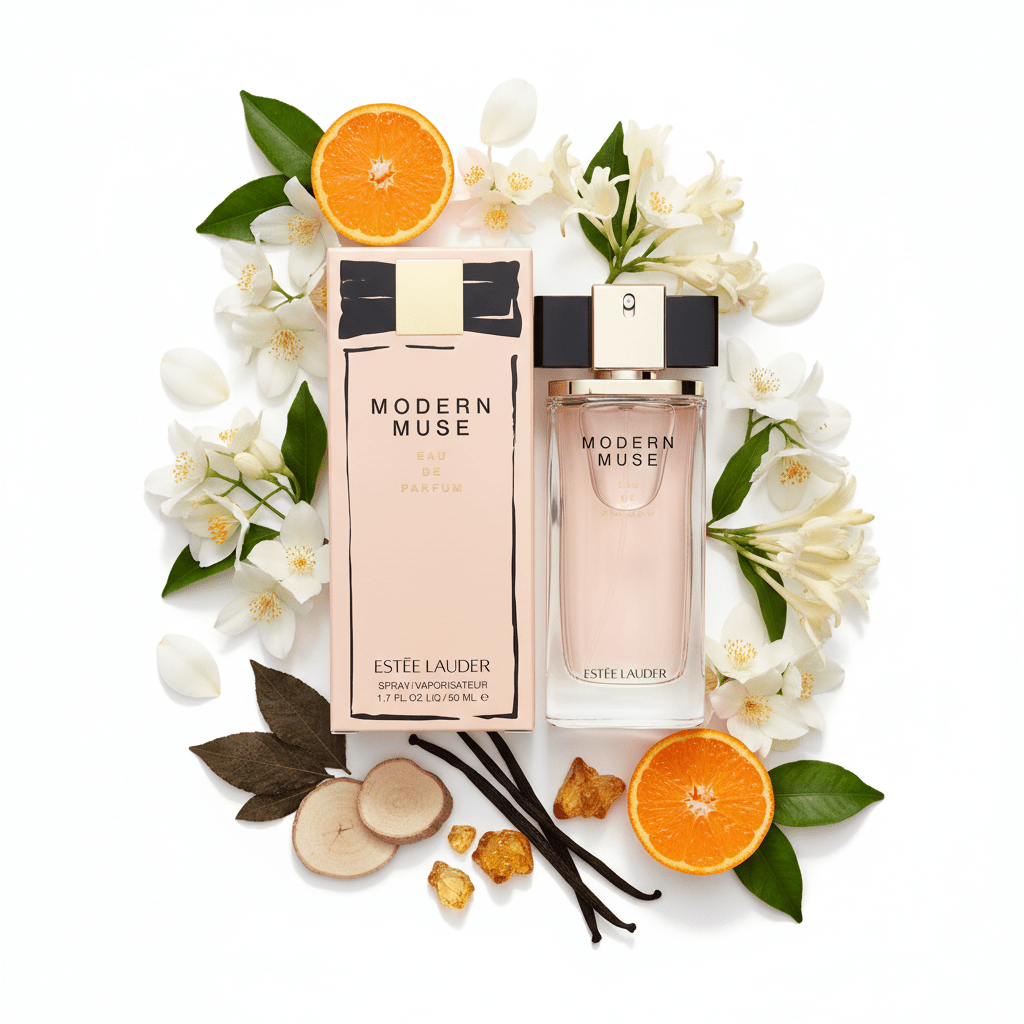
Beautiful by Estée Lauder
Beautiful is one of the strongest alternatives for someone who enjoys Oscar's large romantic floral bouquet.
Beautiful combines rose, mandarin, lily, tuberose, marigold, orange flower, lily of the valley, jasmine, ylang ylang, sandalwood, vetiver, and amber.
Both fragrances share:
- Tuberose
- Ylang ylang
- Jasmine
- Rose
- Orange flower
- Sandalwood
- Vetiver
- Amber
- Rich feminine floral character
The difference: Beautiful is softer, more romantic, smoother, and slightly brighter.
Oscar is spicier, more aromatic, more resinous, and more complex through coriander, basil, lavender, rosemary, myrrh, opoponax, and patchouli.
Choose Beautiful if you want a romantic floral bouquet.
Choose Oscar if you want greater spice and balsamic depth.
Organza by Givenchy
Organza is an excellent alternative for someone who loves Oscar's combination of white florals, spice, amber, and woods.
Organza features nutmeg, gardenia, orange flower, bergamot, tuberose, jasmine, honeysuckle, iris, peony, mace, vanilla, amber, guaiac wood, and cedar.
Both fragrances share:
- Gardenia
- Orange flower
- Bergamot
- Tuberose
- Jasmine
- Iris
- Warm spice
- Amber
- Woody depth
The difference: Organza is creamier, more vanilla-driven, slightly sweeter, and more polished.
Oscar is more aromatic, more resinous, earthier, and more traditionally complex.
Choose Organza if you want creamy white flowers, vanilla, and spice.
Choose Oscar if you prefer balsamic resins, patchouli, herbs, and classic floral richness.
Knowing by Estée Lauder
Knowing is an excellent alternative for someone who appreciates the darker, spicier, earthier side of Oscar.
Knowing combines aldehydes, mimosa, rose, coriander, green notes, tuberose, plum, patchouli, cardamom, orris root, cedar, jasmine, orange blossom, oakmoss, vetiver, sandalwood, amber, musk, and warm spices.
Both fragrances share:
- Coriander
- Tuberose
- Rose
- Jasmine
- Orange blossom
- Patchouli
- Vetiver
- Sandalwood
- Amber
- Musk
- Warm spice
The difference: Knowing is darker, mossier, drier, and more chypre-like.
Oscar is more floral, creamier, more resinous, and slightly softer.
Choose Knowing if you want moss, spice, patchouli, and stronger chypre character.
Choose Oscar if you prefer white florals, sandalwood, amber, and balsamic warmth.
What Is the Difference Between Available Oscar Concentrations?
The Oscar fragrance has historically appeared in more than one concentration, but the version most widely sold today is the Eau de Toilette.
The South Beach Perfumes product featured here is available as an Eau de Toilette spray.
Oscar Eau de Toilette
The Eau de Toilette is the current classic presentation.
Oscar de la Renta and its fragrance license partner continue to market Oscar EDT today.
The current official structure emphasizes:
Top Notes: Mandarin, Bergamot, Coriander Seeds, Basil
Heart Notes: Ylang Ylang, Genet, Orange Flower Absolute, Carnation
Base Notes: Opoponax, Patchouli, Ionone, Heliotrope, Coumarin, Sandalwood
The traditional broader note pyramid also includes gardenia, peach, tuberose, jasmine, rose, orchid, myrrh, vetiver, musk, and amber.
Historical Oscar Parfum
Oscar was also historically produced as a Parfum.
The Parfum was richer and more concentrated, with greater emphasis on flowers, spice, woods, and resins.
Vintage Parfum presentations should not automatically be assumed to smell identical to today's Eau de Toilette because production period, formula changes, aging, and concentration can all affect the experience.
Is a Larger Bottle Stronger?
No.
South Beach Perfumes currently lists different sizes of Oscar Eau de Toilette.
A 3.4 oz bottle contains more fragrance than a 1.6 oz bottle, but the concentration is the same.
Bottle size does not determine fragrance strength.
Learn more about fragrance concentrations
Is Oscar by Oscar de la Renta Discontinued?
No. Oscar Eau de Toilette is not discontinued.
Oscar de la Renta continues to sell the fragrance through its official website, and its current fragrance license partner also lists Oscar Eau de Toilette as an active fragrance.
This is important because the bottle and packaging have changed over the decades.
A packaging redesign or reformulation does not necessarily mean the fragrance has been discontinued.
Oscar remains the house's classic original women's fragrance.
When Was Oscar by Oscar de la Renta Released?
Oscar was released in 1977.
It was the first fragrance from Oscar de la Renta.
The perfume became an important extension of the designer's fashion identity, particularly his association with rich fabrics, color, formal dressing, and romantic femininity.
Oscar also won recognition shortly after its introduction, helping establish it as an important designer fragrance of its era.
Who Created Oscar by Oscar de la Renta?
Oscar was created by perfumer Jean-Louis Sieuzac.
His composition combines floral richness with aromatic herbs, spice, woods, amber, and resins.
Gardenia, tuberose, jasmine, ylang ylang, rose, and orange blossom provide the floral body.
Clove, coriander, basil, rosemary, and lavender introduce complexity.
Sandalwood, patchouli, vetiver, opoponax, myrrh, amber, and musk create the foundation.
That balance helps explain why Oscar feels elaborate without becoming completely overwhelming.
How Many Sprays of Oscar Should Be Used?
Oscar has enough presence that moderate application works best.
Office: 1 to 2 sprays
Everyday wear: 2 to 3 sprays
Dinner: 2 to 4 sprays
Date night: 3 to 4 sprays
Formal event: 3 to 4 sprays
Fall and winter: 3 to 4 sprays
Warm weather: 1 to 2 sprays
Two or three sprays are a good starting point.
The white florals, spices, resins, woods, and amber create enough presence that heavy application is usually unnecessary.
Is Oscar by Oscar de la Renta Authentic?
Yes. Oscar by Oscar de la Renta sold by South Beach Perfumes is an authentic designer fragrance.
Because Oscar has been produced since 1977, authentic bottles can vary considerably depending on:
- Production year
- Bottle generation
- Packaging design
- Concentration
- Bottle size
- Distribution region
- Batch-code placement
- Formula era
Older bottles may look very different from today's Oscar Eau de Toilette.
That does not automatically mean they are counterfeit.
Learn more about our product guarantee policy
Who Should Buy Oscar by Oscar de la Renta?
Oscar is particularly well suited to women who:
- Love classic floral perfumes
- Enjoy gardenia
- Appreciate tuberose
- Like ylang ylang
- Enjoy jasmine
- Appreciate rose
- Like warm spice
- Enjoy sandalwood
- Appreciate amber
- Like patchouli
- Enjoy balsamic resins
- Want a formal fragrance
- Prefer elegant perfumes over sugary gourmands
- Appreciate historical designer fragrances
- Want a fragrance with substantial personality
It is especially compelling for someone who wants a true floral perfume with spice, woods, resins, and warmth underneath the flowers.
Who May Not Like Oscar by Oscar de la Renta?
Oscar may not be ideal for someone who prefers:
- Minimalist skin scents
- Very light citrus fragrances
- Modern blue-style freshness
- Candy-like fruity perfumes
- Heavy gourmand sweetness
- Marshmallow
- Caramel
- Extremely soft projection
- Fragrances without white florals
Tuberose, gardenia, ylang ylang, clove, patchouli, and opoponax can all be noticeable.
Someone who strongly dislikes classic floral perfumery should consider testing Oscar before purchasing.
Final South Beach Perfumes Expert Review
Oscar by Oscar de la Renta is a fragrance that reflects the designer behind the name.
It is polished.
Decorative.
Romantic.
And unafraid of richness.
The opening immediately gives the perfume dimension.
Clove provides warmth.
Coriander introduces aromatic spice.
Basil gives the fragrance greenery.
Gardenia and orange blossom create floral richness.
Bergamot adds brightness.
Peach gives the opening softness.
Then the bouquet expands.
Tuberose becomes creamy.
Ylang ylang adds warmth.
Jasmine creates depth.
Rose introduces classic femininity.
Orchid adds another floral layer.
Lavender and rosemary give the heart an aromatic quality that is unusual in such a traditionally feminine floral fragrance.
The drydown is where Oscar reveals its greatest depth.
Sandalwood creates warmth.
Opoponax provides sweet resinous character.
Myrrh adds balsamic darkness.
Patchouli introduces earthiness.
Vetiver gives the base dryness.
Amber brings warmth.
Musk softens the final stage.
This progression explains why Oscar remains interesting almost fifty years after its 1977 release.
It is not simply a flower bouquet.
It is flowers against spices.
Flowers against herbs.
Flowers against resins and woods.
That contrast gives the perfume structure.
Fall and winter are particularly strong seasons because the sandalwood, amber, patchouli, opoponax, myrrh, and spice become especially attractive in cooler air.
Spring also works beautifully because the gardenia, tuberose, jasmine, rose, orange blossom, and peach feel more prominent.
Its strongest occasions are similarly classic.
Dinner.
Weddings.
Theater.
Formal events.
Anniversaries.
Special occasions.
Oscar is the kind of fragrance that naturally feels at home with polished clothing and a deliberate sense of presentation.
The comparison fragrances help define its place.
Beautiful by Estée Lauder is softer, more romantic, and more luminous.
Organza by Givenchy is creamier, more vanilla-driven, and more modern in its spicy white floral construction.
Knowing by Estée Lauder is darker, drier, mossier, and more chypre-like.
Oscar sits between them.
It has the large romantic bouquet of Beautiful.
The spice and white flowers of Organza.
The depth and structure of Knowing.
Yet it remains unmistakably its own fragrance.
Its continued production is also significant.
Many designer perfumes introduced in the 1970s have disappeared completely.
Oscar has not.
The house still sells Oscar Eau de Toilette today, and its fragrance partner continues to identify it as an active signature scent.
The fragrance has evolved over decades, and longtime wearers may perceive differences between vintage and current bottles. Ingredient restrictions, reformulation, production methods, and aging can all influence how different generations smell.
But the central identity remains recognizable.
Flowers.
Spice.
Woods.
Amber.
Resins.
Elegance.
For women who appreciate gardenia, orange blossom, tuberose, ylang ylang, jasmine, rose, clove, coriander, sandalwood, opoponax, patchouli, myrrh, amber, vetiver, and musk, Oscar remains one of the enduring examples of classic American designer perfumery.
It is not designed to smell casual.
It is designed to feel dressed.
And that remains its greatest strength.
To explore fragrance families, scent personalities, notes, seasons, and occasions that best match your style, explore our Ultimate Guide to Finding Your Signature Scent.




0 comments